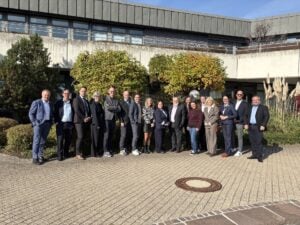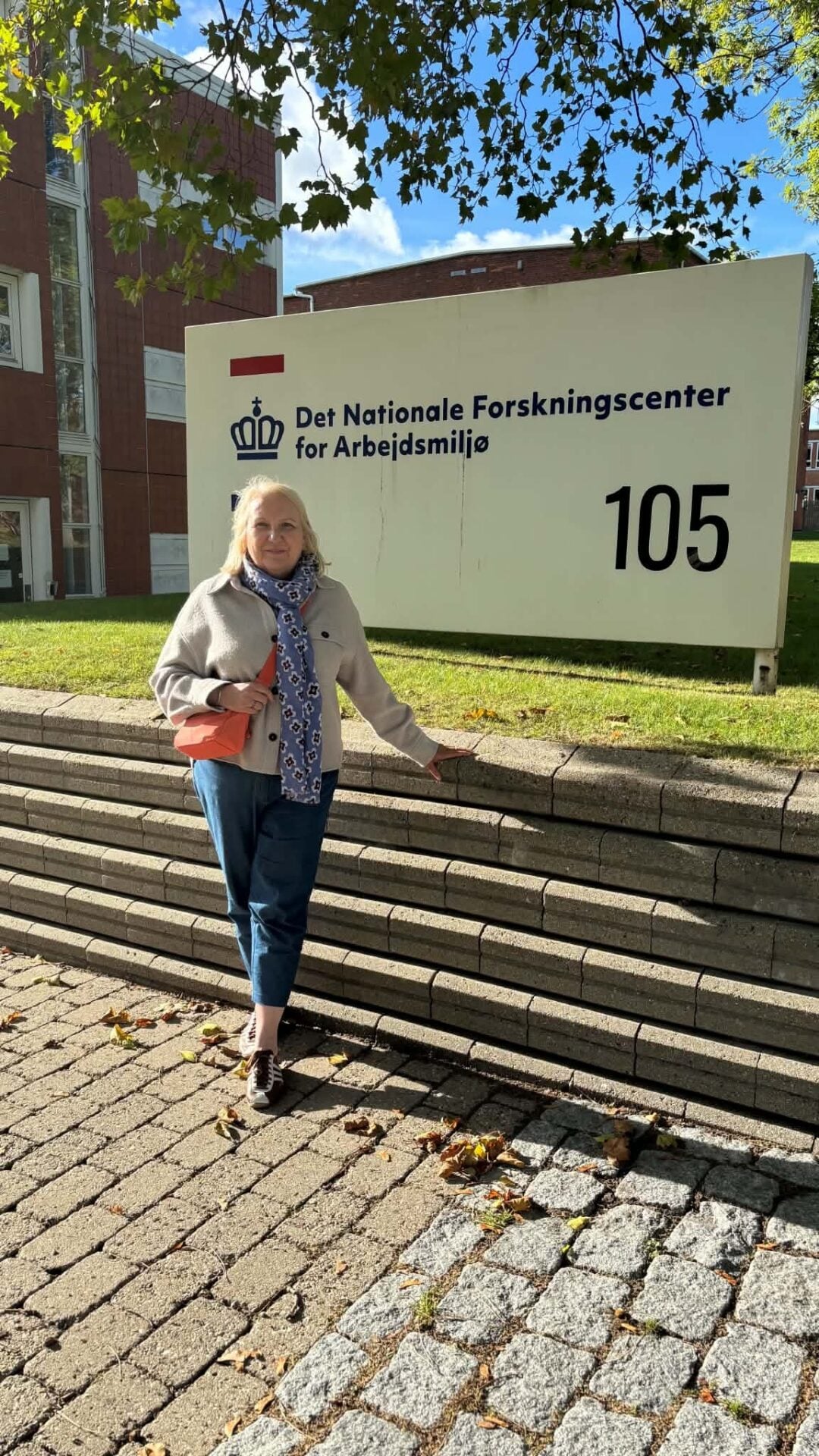
In early October, Dr Małgorzata Gołofit-Szymczak from the Central Institute for Labour Protection – National Research Institute (CIOP-PIB) spent an intensive and inspiring week at the National Research Centre for the Working Environment (NFA) in Denmark. The exchange, carried out within the PEROSH Researcher Exchange Programme under the mentorship of Prof. Professor Anne Mette Madsen provided an opportunity to deepen scientific knowledge, share research experience, and explore opportunities for further collaboration between the two institutions.
The main focus of the visit was the application of MALDI-TOF technology for the rapid identification of microorganisms, particularly bacteria and moulds. This topic is of considerable importance in research on biological hazards, including the qualitative identification of microorganisms present in the working environment.
MALDI-TOF (Matrix-Assisted Laser Desorption/Ionisation Time-of-Flight Mass Spectrometry) allows microorganisms to be identified quickly by analysing their characteristic protein profiles and comparing them with reference data in a database. This makes it possible to identify the microorganism, often down to the species level.
During the exchange, the participants discussed the potential applications of this method in microbiological research, with particular emphasis on the identification of bacteria and moulds. The exchange of knowledge and research experience provided valuable insights into the practical aspects of MALDI-TOF technology and its potential for research into biological hazard assessment. Rapid and reliable qualitative identification of microorganisms can support the detection of biological agents present in the working environment and constitute an important component of measures designed to protect workers’ health and safety.
An important part of the visit was a seminar organised by Professor Anne Mette Madsen. During the event, Dr Małgorzata Gołofit-Szymczak delivered a presentation entitled „Biohazard Laboratory of CIOP-PIB: From Scientific Research to Effective Prevention”, outlining the activities of CIOP-PIB.
The exchange was a valuable experience, providing an opportunity to gain insight into the research approaches adopted by the partner institution, discuss the applications of advanced microbial identification methods, and identify potential areas for joint activities.
The visit to NFA helped strengthen professional ties between researchers, facilitate the exchange of knowledge and experience, and identify prospects for future research collaboration. Initiatives of this kind, carried out within the PEROSH Researcher Exchange Programme, foster international scientific exchange and promote joint efforts to improve occupational safety and health protection.