Background
Light at the workplace does far more than enable vision. It affects circadian rhythms, sleep, alertness, mood and a range of physiological processes that are relevant for health, performance and safety at work. With new lighting technologies, extended operating hours, and growing numbers of workers in shift and night work, understanding these non-visual effects of light has become crucial for occupational safety and health (OSH). Across Europe, OSH researchers face similar challenges: how to assess and control light exposure at work, how to design healthy lighting for day and night, and how to translate rapidly evolving scientific evidence into practical guidance and regulation. At the same time, international discussion about light exposure, human health and well-being is intensifying, including recent consensus and expert activities on ocular light exposure. The European Scientific Network on Non-Visual Effects of Light (NoVEL) provides a platform for European institutes to coordinate research, share methods and data, and speak with a joint scientific voice on the non-visual effects of light in occupational settings, within the PEROSH framework.
Objectives
NoVEL aims to:
- Coordinate research on non-visual effects of light in occupational contexts, including shift work, night work, irregular schedules and daytime work in suboptimal lighting.
- Share information on ongoing and planned R&D projects across PEROSH member institutes and partner organizations.
- Enable joint studies and project proposals, for example on circadian-friendly workplace lighting, measurement of personal light exposure, and health outcomes in real-life work environments.
- Facilitate access to complementary expertise and methods, such as optical radiation and light exposure measurement, chronobiology and sleep research, epidemiology, hormone analysis, and modelling of circadian responses.
- Support scientific communication, including joint workshops, webinars, conference sessions, consensus and position papers, and meta-analyses.
- Contribute to regulation and standardisation by providing evidence-based input on indoor lighting and ocular light exposure to national and international bodies, and by informing the discussion on exposure metrics and guidelines.
Target groups
- OSH research scientists and professionals working on lighting, shift work, fatigue, sleep, chronobiology, occupational medicine, ergonomics and human factors.
- Policy makers and regulators responsible for occupational exposure limits, lighting recommendations and related standards.
- Standardisation bodies, designers and practitioners involved in workplace lighting design, implementation and evaluation.
Deliverables
Intended outputs of NoVEL include:
- Joint scientific publications (original research, consensus and position papers, reviews, meta-analyses).
- Practical guidance for OSH practice and workplace lighting (e.g. recommendations for shift and night work lighting).
- Harmonised protocols for measurement and reporting, e.g. of personal light exposure, etc., aligned with FAIR data principles to facilitate cross-study comparisons.
- Joint research proposals (e.g. for EU framework programmes, national calls or metrology projects).
- Workshops, webinars and conference contributions under the PEROSH umbrella.
Scientific relevance
Recent research has highlighted the strong links between light exposure, circadian disruption, sleep, and health outcomes such as metabolic and cardiovascular risk, mental health and performance decrements, especially among shift workers.
NoVEL addresses key scientific needs by:
- Promoting high-quality experimental and epidemiological studies with accurate, standardised assessment of light exposure and non-visual responses.
- Supporting adoption of harmonised, state-of-the-art light exposure metrics in human studies.
- Enabling coordinated publication of data and methods to strengthen the evidence base for occupational recommendations on light.
- Creating a European forum to discuss knowledge gaps and priorities in research on non-visual effects of light in work life.
PEROSH participants
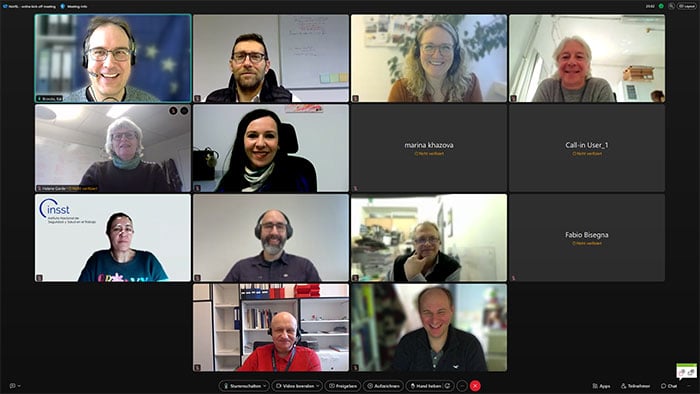
- Project leader: Kai Broszio (BAuA)
- Agnieszka Wolska, Jacek Kubica (CIOP-PIB)
- Massimo Borra, Andrea Militello, Fabio Boccuni (INAIL)
- Jean-Marc Deniel (INRS)
- Diana Torremocha García, Maday Mesa (INSST)
- Anne Helene Garde (NFA)
- Anjoeka Pronk (TNO)
Collaborative partners
- Chiara Burattini, Fabio Bisegna (La Sapienza)
- Price Luke (UKHSA)
- Manuel Spitschan (TU Munich)
- Sylvia Rabstein, Thomas Behrens (IPA)
- Christopher Kyba (Ruhr University Bochum)
- Alwin van Drongelen (Netherlands Aerospace Centre)