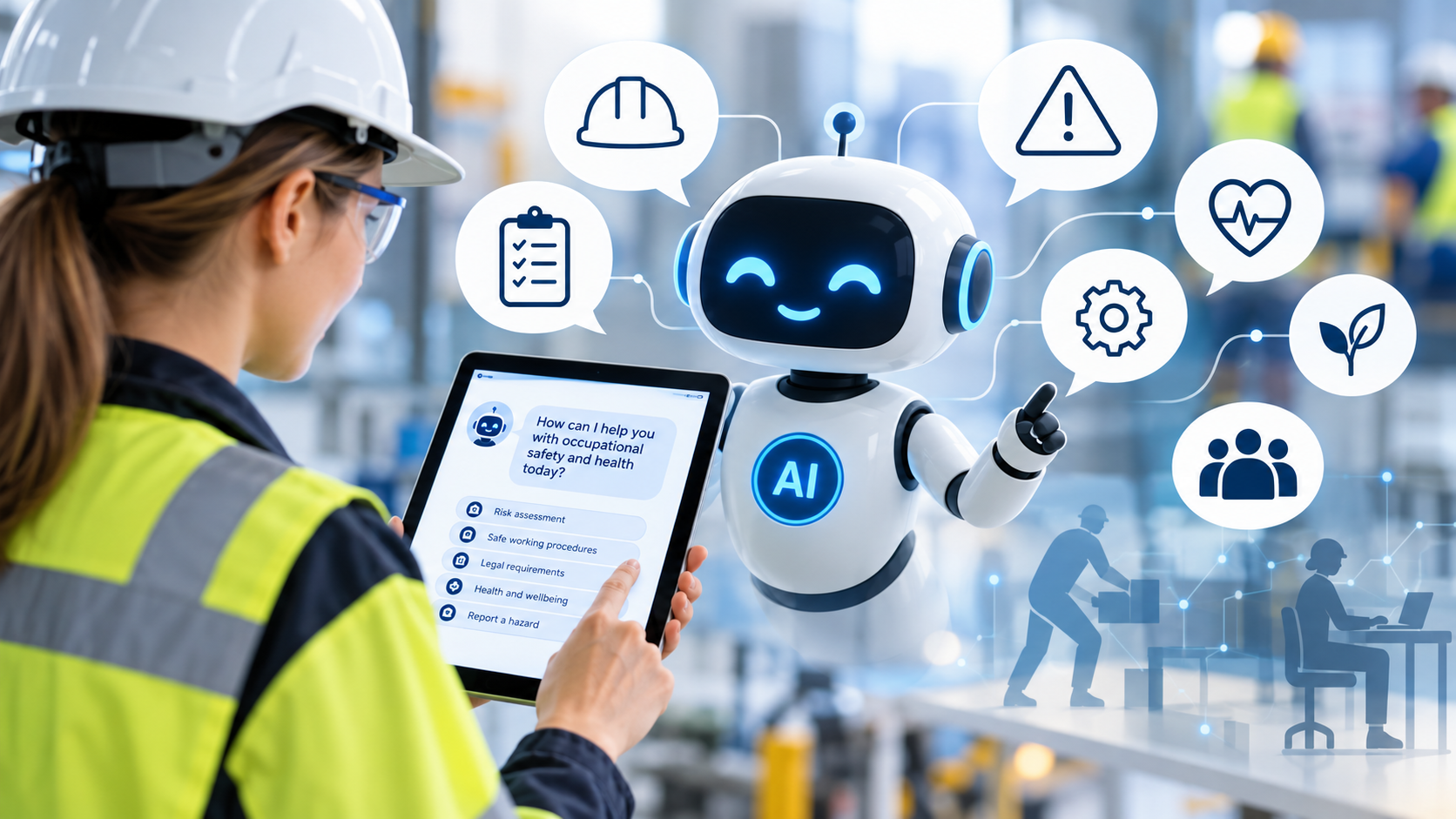
AI-based chatbots are rapidly changing how professional knowledge is accessed, processed and applied. But what does this mean for occupational safety and health (OSH) professionals and their everyday work?
This PEROSH project explores how OSH professionals use AI-based chatbots and how these tools affect professional practice. It investigates changes in workflows, decision-making and professional routines, as well as perceived benefits, challenges and potential new burdens. Particular attention is given to changes in access to OSH knowledge and professional autonomy, and to the new competencies and training needs emerging from AI-supported work
Building on previous research by AUVA and BAuA on the opportunities and risks of AI-based chatbots in OSH, the project takes a qualitative, cross-country approach. Following a review of current research, interviews will be conducted with occupational physicians, safety specialists, HSE managers and prevention professionals across participating PEROSH countries.
The project will provide insights into how AI-based chatbots are reshaping OSH practice and will develop practical recommendations for competence development, vocational training and continuing professional education.
Objectives
- Explore current use patterns of AI-based chatbots among OSH professionals and how users manage their opportunities and limitations.
- Investigate the impact of chatbot integration on workflows, decision-making processes, and professional routines, including both benefits and potential new burdens.
- Examine how AI may influence knowledge accessibility, professional autonomy, and the dissemination of OSH expertise.
- Identify emerging competency requirements and training needs arising from AI-supported OSH practice.
Expected Results
- A comprehensive overview of the current state of AI chatbot use in OSH practice.
- Evidence on the advantages, limitations, and practical implications of AI-supported work for OSH professionals.
- Insights into competency development needs and future qualification requirements for OSH practitioners.
- Recommendations and practical guidelines for vocational training and continuing professional education.
- A final project report and dissemination activities supporting the responsible integration of AI technologies into a modern, knowledge-driven OSH culture across Europe.
Project period: November 2026 – April 2028
Project participants
The project includes participants from various PEROSH partner institutions:
· Małgorzata Pęciłło-Pacek (CIOP, Poland)
· Dafni Nalmpant Sarikaki (ELINYAE, Greece)
· Riikka Ruotsala (FIOH, Finland)
· Christoph Schiefer (IFA, Germany)
· Giuliana Buresti (INAIL, Italy)
· Simone Russo (INAIL, Italy)
· Lien Wioland (INRS, France)
· Jean-Jacques Atain Kouadio (INRS, France)
· Robert Ljung (SWEA, Sweden)
· Eelco Kuijpers (TNO, the Netherlands)
Project leaders
Marie Jelenko, AUVA, Austria, marie.jelenko@auva.at
Swantje Robelski, BAuA, Germany, robelski.swantje@baua.bund.de