A new study developed a European job exposure matrix for psychosocial risk factors (EuroJEM) by harmonizing three Nordic national job exposure matrices.
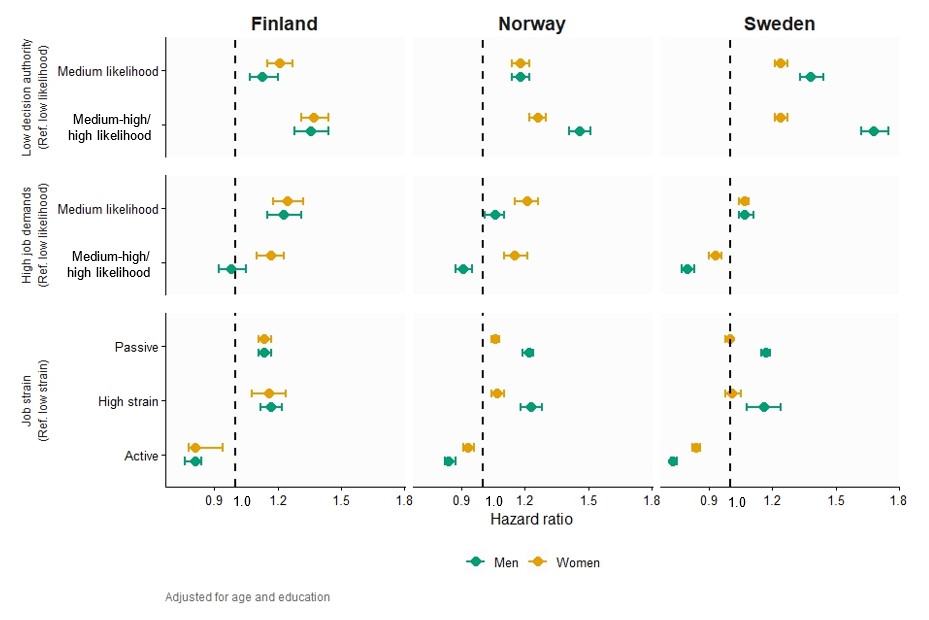
The matrix was used to assess psychosocial risk factors at the occupational group level and their association with diagnosed depression, using extensive Nordic register data. The datasets covered nearly six million employees in Finland, Norway, and Sweden.
The results were consistent across all datasets: in occupational groups where employees had low decision authority, the risk of depression was substantially higher, particularly among men. The combination of high job demands and low decision authority increased the risk of depression, whereas high decision authority combined with high demands reduced it. The independent role of job demands, however, remained unclear, especially among women.
The study shows that EuroJEM is suitable for investigating psychosocial working conditions in Nordic register data. The findings also suggest that increasing employees’ decision authority may be an important way to support mental health and prevent depression, although the measurement of certain exposures, such as job demands, still requires further development.
Related institutes:
FIOH
Contact information:
Author(s): L. Salonen, D. Falkstedt, K. Y. Pan, M. Albin, I. S. Mehlum, K. Undem, T. Leinonen, S. Solovieva
E-mail: laura.salonen@ttl.fi
Source/Copyright Holder image: FIOH